Home › Rising Damp › Treatment
Rising Damp Treatment: Methods, Costs and Effectiveness
Treating rising damp requires more than just installing a DPC. Here's what actually works, what doesn't, and how much you should expect to pay.
10 min read · Last reviewed: 3 July 2026
Quick summary
- Three-part treatment: Install or repair DPC, remove contaminated plaster, replaster with salt-resistant render
- Chemical DPC: £40-70/linear metre; less disruptive than physical insertion but depends on wall porosity
- Physical DPC: £80-150/linear metre; guaranteed barrier but requires propping and is highly disruptive
- Replastering: £40-60/sq metre with renovating plaster; essential because hygroscopic salts will continue pulling moisture from air even after DPC is fixed
- Timeframe: 4-8 weeks from injection to full drying; longer if walls were heavily saturated
- Chemical DPC injection cost
- £40-70 per linear metre
- Physical DPC insertion cost
- £80-150 per linear metre
- Replastering cost
- £40-60 per sq metre
- Total cost, single room
- £1,460-2,420
- Full treatment timeline
- 8-16 weeks, injection to redecoration
Why rising damp treatment is more than just a DPC
Most people assume rising damp treatment means installing a damp proof course. In reality, that's only the first step. Even after a DPC stops water rising from below, the damage is already done:
- Walls are saturated and take months to dry out
- Salts have migrated into the plaster and will keep pulling moisture from the air (hygroscopic salts)
- Existing plaster may have delaminated from the wall and will fail even when dry
- Timber in contact with damp masonry may have started to rot
Effective rising damp treatment addresses all of these, not just the water ingress itself.
The three-part treatment sequence
Step 1: Install or repair the DPC
No remedial work will last unless you stop water rising from the ground. Two methods exist:
Chemical injection DPC (most common)
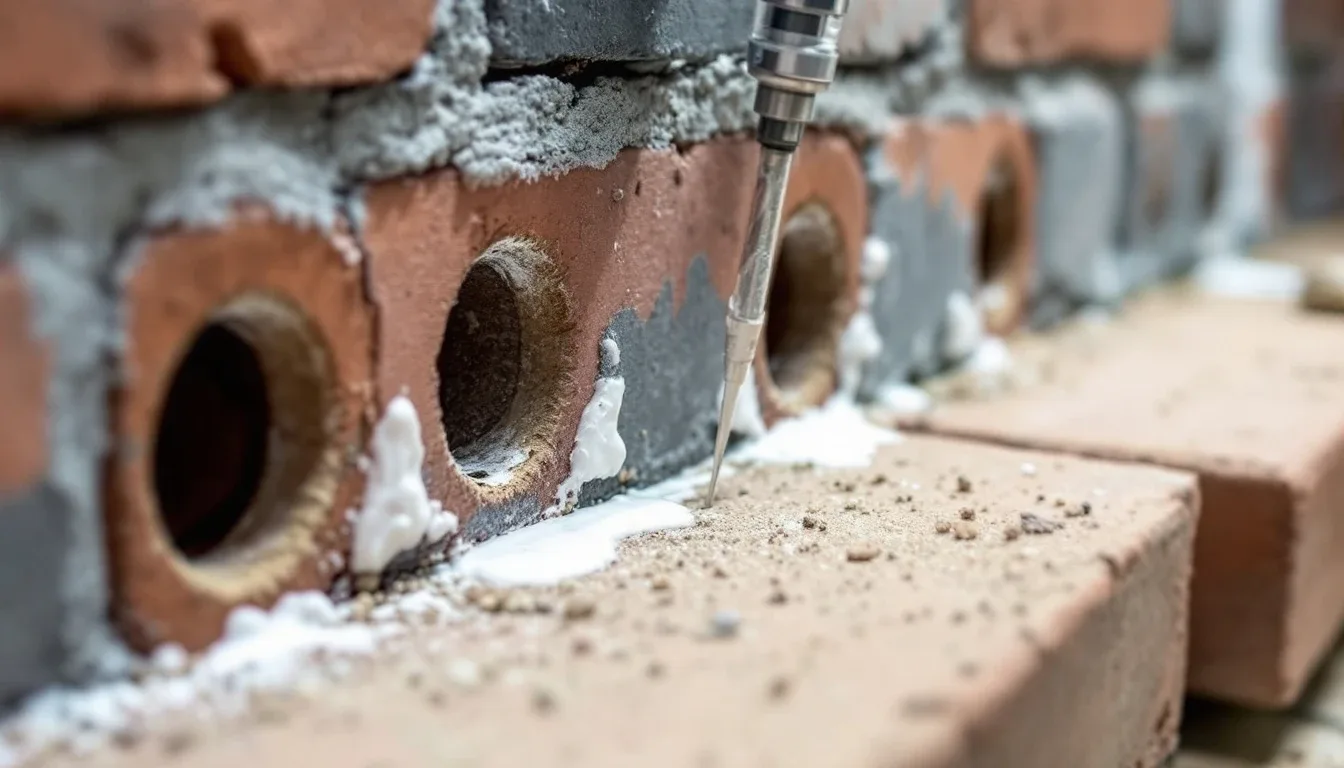
Holes are drilled every 100-120mm along the mortar bed at 150mm above external ground.4 Silicone or resin-based cream is injected under pressure. The chemical diffuses into the brick and mortar, forming a water-repellent zone within 2-4 weeks.
Cost: £40-70 per linear metre
Pros: Least disruptive. Can be done from inside if external access is difficult.
Cons: Effectiveness depends on brick porosity. Dense engineering bricks or very thick walls (450mm+) may not absorb enough chemical. No way to visually verify it worked until months later.
Physical DPC insertion
A horizontal slot is cut through the mortar bed using a chain saw. A new polymer membrane is inserted and the slot is re-mortared. Temporary propping is required while the work is carried out.
Cost: £80-150 per linear metre
Pros: Guaranteed physical barrier. Preferred by mortgage lenders.
Cons: Highly disruptive. Risk of structural movement during cutting. Only practical in single-leaf or cavity walls; solid thick walls (e.g., Victorian 450mm brick) are difficult.
Step 2: Remove contaminated plaster
Plaster in contact with rising damp absorbs hygroscopic salts (nitrates, chlorides, sulphates). These salts pull moisture from the air even after the DPC is installed, keeping the wall perpetually damp to touch.
The only solution is to hack off all contaminated plaster to at least 300mm above the highest visible tide mark. In severe cases, this may mean stripping plaster to 1.2-1.5 metres height.
BRE Digest 245 (2007) recommends removing plaster to bare masonry and allowing walls to dry for at least 4 weeks before replastering.1 In practice, contractors often replaster sooner if using a breathable renovating plaster system.
Step 3: Replaster with salt-resistant render
Standard gypsum plaster will fail within months if applied over masonry contaminated with hygroscopic salts. Two approaches work:
Renovating plaster systems (most common)
A base coat of porous, salt-resistant render (often calcium silicate or lime-based) is applied directly to the masonry. This allows salts to migrate into the render and water vapour to evaporate. A thin finishing coat of gypsum plaster goes on top.
Brands include Renderoc HB40 (Fosroc), Rinzaffo MGN (Mapei), and Limelite Renovating Plaster. All work on the same principle: sacrificial base coat that accommodates salt crystallisation without cracking.
Cost: £40-60 per square metre including labour
Drying time: 4-6 weeks before decoration
Tanking systems (alternative)
A waterproof membrane is applied to the wall face, creating an impermeable barrier. This traps moisture and salts behind the membrane rather than letting them evaporate. Used mainly in basements rather than for rising damp, because it offers no long-term solution to salt contamination.
Additional steps often required
Fix DPC bridging
If external paving, render, or internal plaster extends below the DPC line, moisture can bypass the barrier. Cut back render to 150mm above DPC level. Lower external paving or install a drainage channel.
Improve external drainage
Blocked gullies, broken downpipes, or ground sloping toward the building can keep walls saturated regardless of DPC condition. Fix these before treating internally or damp will return.
Treat timber
Floor joists, skirting boards, and door frames in contact with damp walls may show early signs of wet rot. Inspect and replace if necessary. Do not reinstall timber against walls until they have fully dried.
Increase ventilation
Poor ventilation slows drying and can mask rising damp as condensation. Install airbricks if underfloor voids are poorly ventilated. Ensure rooms have adequate background ventilation (trickle vents or passive airbricks at high level).
How long does treatment take?
Chemical DPC injection: 1-2 days for a typical terraced house
Chemical curing time: 2-4 weeks for the water-repellent zone to fully form
Wall drying time: 4-12 weeks depending on wall thickness, saturation level, and season
Plaster hack-off and replastering: 3-5 days
Plaster drying before decoration: 4-6 weeks
Total timeline from injection to redecoration: 8-16 weeks. Expect longer in winter or if walls were heavily saturated.
What doesn't work
Treating the symptoms without addressing the cause
Painting over damp patches with anti-mould paint, replastering without installing a DPC, or using dehumidifiers as a permanent solution. None of these stop water entering from below.
Installing a DPC but leaving contaminated plaster
The most common mistake. Hygroscopic salts will keep the wall damp to touch indefinitely, even though the DPC is working. This leads to a false diagnosis of "DPC failure" when the real issue is salt contamination.
Electro-osmotic systems
Devices that claim to "reverse the polarity" of rising damp and push water back into the ground. BRE research found no evidence these work. They remain popular because they require no building work, but independent field studies show no benefit over leaving the damp untreated.
Porous tubes or siphons
Plastic tubes inserted into walls to "wick" moisture away. These rely on natural evaporation, which is already happening. They offer no benefit in walls with high ground moisture or poor ventilation.
How much does rising damp treatment cost?
Costs vary by wall length, access, and severity of salt contamination. Typical figures for a ground floor room in a terraced house (8 metres of affected wall):
- Chemical DPC injection: £320-560 (8m × £40-70/m)
- Hack off plaster to 1m height: £200-400 (labour + skip hire)
- Replastering with renovating system: £640-960 (16 sq m × £40-60/sq m)
- Redecoration: £300-500 (mist coat + 2 topcoats)
Total: £1,460-2,420 for a single room. A whole house might cost £3,000-6,000 depending on how many walls are affected.
Add £500-1,000 if external drainage or DPC bridging issues need resolving. Add £800-1,500 for structural timber repairs if wet rot is present.
Can rising damp come back after treatment?
Yes, but only if the treatment was incomplete or the building has changed. Common causes of recurrence:
- Bridging: New paving, render, or internal finishes installed below DPC level
- Drainage failure: Broken gutters or blocked gullies re-saturating walls
- DPC bypass: Soil or debris piled against walls above DPC height
- Inadequate replastering: Standard gypsum used instead of renovating plaster, or contaminated plaster not fully removed
A properly installed DPC (chemical or physical) should last 20-30 years minimum.2 If damp returns within 5 years, the cause is almost always poor workmanship or a building defect unrelated to the DPC itself.
Do I need a specialist contractor?
For chemical DPC injection, yes. The work requires specialist equipment (injection pumps, deep-wall drilling) and should be carried out by a Property Care Association (PCA) member who can provide an insurance-backed guarantee.
For replastering, any competent plasterer can work with renovating plaster systems, but the material itself must be specified correctly. Do not let a contractor substitute standard sand-cement render or gypsum-based products.
Get at least two quotes and ask to see examples of completed work. Be wary of anyone offering a "quick fix" without replastering or who cannot explain how they will address salt contamination.
Frequently asked questions
What is the most effective treatment for rising damp?
The most effective treatment is installing or repairing the damp proof course (DPC), either through chemical injection or physical membrane insertion. However, treatment must also address hygroscopic salts in the plaster and any bridging or external drainage issues, or damp will return.
How much does rising damp treatment cost?
Chemical DPC injection costs £40-70 per linear metre. Replastering with salt-resistant render adds £40-60 per square metre. A typical terraced house might cost £1,500-3,000 for a complete treatment including both walls and replastering.
Can rising damp come back after treatment?
Yes, if the root cause was not addressed. Common reasons include bridged DPCs from external render or paving, inadequate salt removal during replastering, or ongoing drainage problems that keep walls saturated. A properly installed DPC should work permanently if maintained correctly.
How long does it take for walls to dry after rising damp treatment?
Walls typically dry within 4-12 weeks after DPC installation, depending on thickness, saturation, and season. Renovating plaster can be applied before walls are fully dry, but decoration should wait until moisture levels drop below 20% on a moisture meter.
Can you treat rising damp yourself?
Chemical DPC injection requires specialist equipment and should not be DIY. However, you can hack off contaminated plaster and replaster with renovating systems yourself if you are competent with building work. Most mortgage lenders will not accept DIY rising damp treatment without an insurance-backed guarantee.
Sources and further reading
- Building Research Establishment (2007). BRE Digest 245: Rising damp in walls: diagnosis and treatment. Watford: BRE Press.
- Property Care Association (2023). Code of Practice for the Installation of Chemical Damp-proof Courses. Huntingdon: PCA. (accessed 3 July 2026)
- Historic England (2016). Remedying Damp in Historic Buildings. Available: historicengland.org.uk
- HM Government (2022). Approved Document C: Site preparation and resistance to contaminants and moisture. Available: gov.uk
Related guides: What is Rising Damp? · Rising Damp Signs · Damp Proof Injection · Damp Proof Plaster